Tracing Subtle Menu Transition Timings to Streamline Inventory Sorting in Resource Management Simulations
Gisela Koch · Jul 30, 2026
Tracing Subtle Menu Transition Timings to Streamline Inventory Sorting in Resource Management Simulations
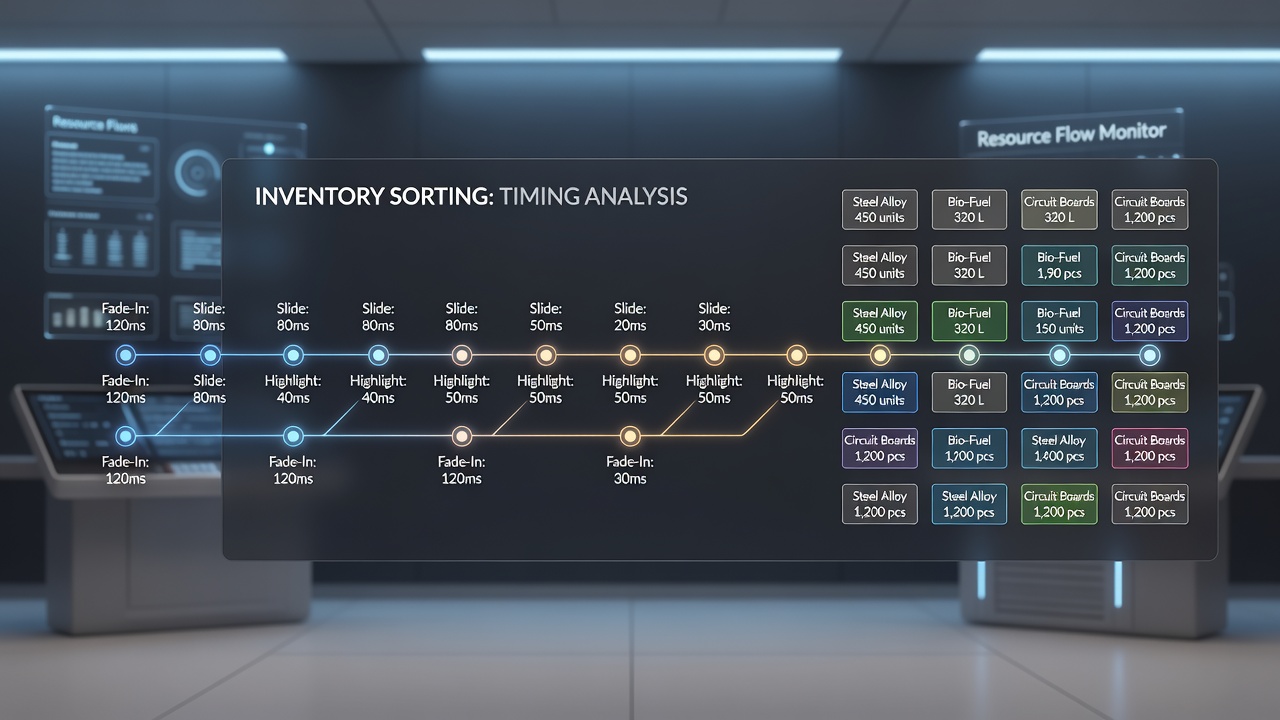
Resource management simulations rely on precise menu systems where transition timings between inventory screens determine how quickly players can sort and allocate items across production chains. Developers examine frame-by-frame data from these transitions to identify delays that occur during category switches or item stacking operations and researchers have documented patterns where even 50-millisecond variances affect overall workflow throughput in large-scale factories or colony setups.
Core Mechanics of Menu Transition Analysis
Engine logs capture the exact milliseconds required for a menu to fade out, load new data structures, and render updated grids, while observers note that these timings often align with underlying database queries for item attributes such as weight, rarity, and compatibility flags. When teams synchronize transition durations with sorting algorithms, inventory lists update without visible stuttering and players maintain continuous control over drag-and-drop sequences that span multiple storage containers.
Data from simulation titles released through 2025 shows average menu transition intervals ranging between 120 and 180 milliseconds on mid-range hardware, and adjustments to shader compilation or texture streaming routines have reduced those figures by up to 35 percent according to internal studio reports. Engineers apply profiling tools that tag each animation curve and input buffer event so that overlapping operations, such as auto-sorting while a category panel slides into view, receive priority scheduling.
Implementation Techniques Across Development Pipelines
Studios integrate custom telemetry hooks that record timestamp deltas at every stage of the inventory UI lifecycle, from button press detection through final pixel output, and these hooks feed into visualization dashboards that highlight bottlenecks during peak item counts exceeding 500 entries. One documented workflow involves correlating transition timing spikes with specific sorting criteria like alphabetical order versus material type and developers adjust easing functions or preload adjacent menus to flatten those spikes.
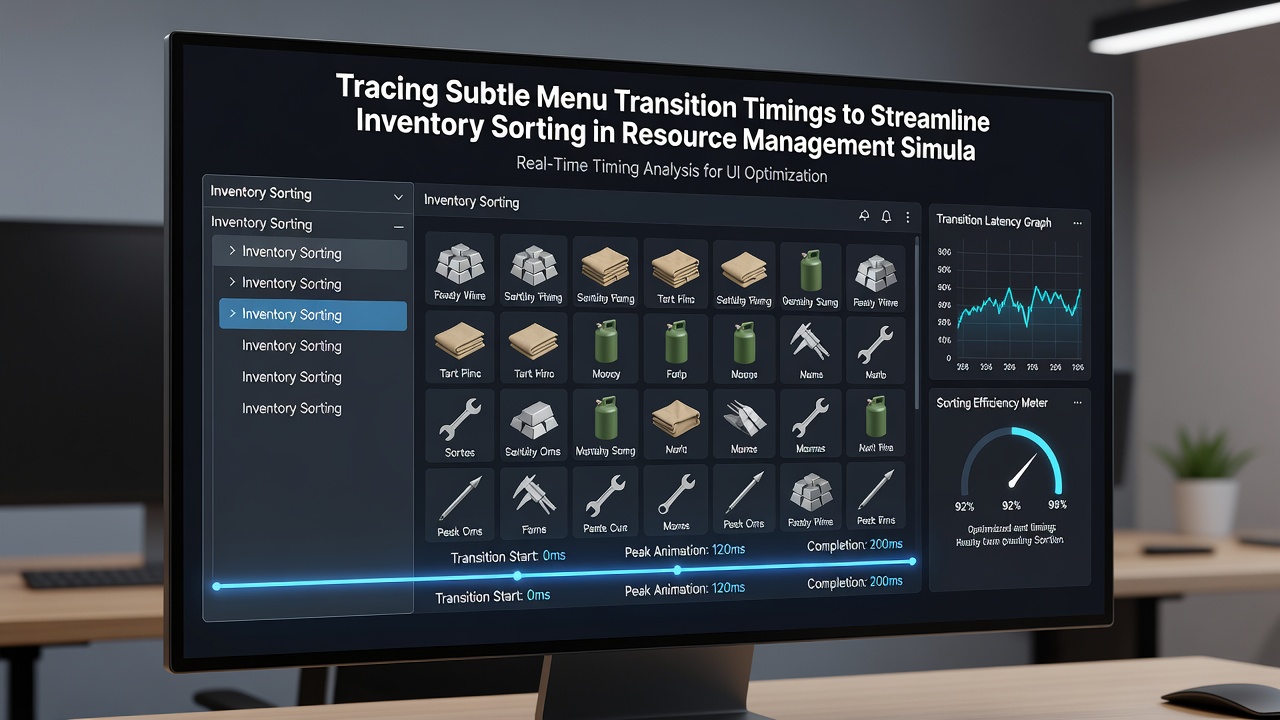
What's interesting is how these optimizations extend to multiplayer environments where multiple players access shared inventories simultaneously, and frame pacing variations must remain consistent across network latency ranges reported by the International Game Developers Association. In July 2026 several European studios began publishing anonymized datasets that detail transition timing distributions collected from public beta branches, allowing independent researchers to model expected performance on different console architectures.
Impact on Player Efficiency and System Resources
Evidence from performance audits indicates that streamlined menu transitions directly influence how rapidly players resolve resource bottlenecks, such as rerouting raw materials during sudden demand surges, and reduced sorting latency correlates with higher completion rates for complex production milestones. Memory allocation patterns tied to menu state changes also benefit when transition durations stay below certain thresholds, freeing cycles for background simulation threads that handle supply chain calculations.
Teams often test these changes against baseline builds using standardized scenarios that include 200-item inventories with mixed stack sizes and the resulting metrics demonstrate measurable decreases in total time spent navigating menus versus executing actual production tasks. Academic groups at institutions in Australia and Canada have examined similar timing data within broader studies of human-computer interaction in strategy environments, confirming that consistent transition feedback loops support sustained player focus over extended sessions.
Conclusion
Continued refinement of menu transition timings remains central to inventory management features in resource simulations, as developers combine telemetry analysis with iterative tuning to support fluid sorting across expanding item libraries and storage networks. Ongoing releases in 2026 and beyond will likely incorporate adaptive timing systems that respond to hardware capabilities while preserving the precise control players expect from these detailed management experiences.