Tracing Footstep Echo Variations to Detect Hidden Passages in Sound-Based Stealth Titles
Harper Griffin · Aug 6, 2026
Tracing Footstep Echo Variations to Detect Hidden Passages in Sound-Based Stealth Titles
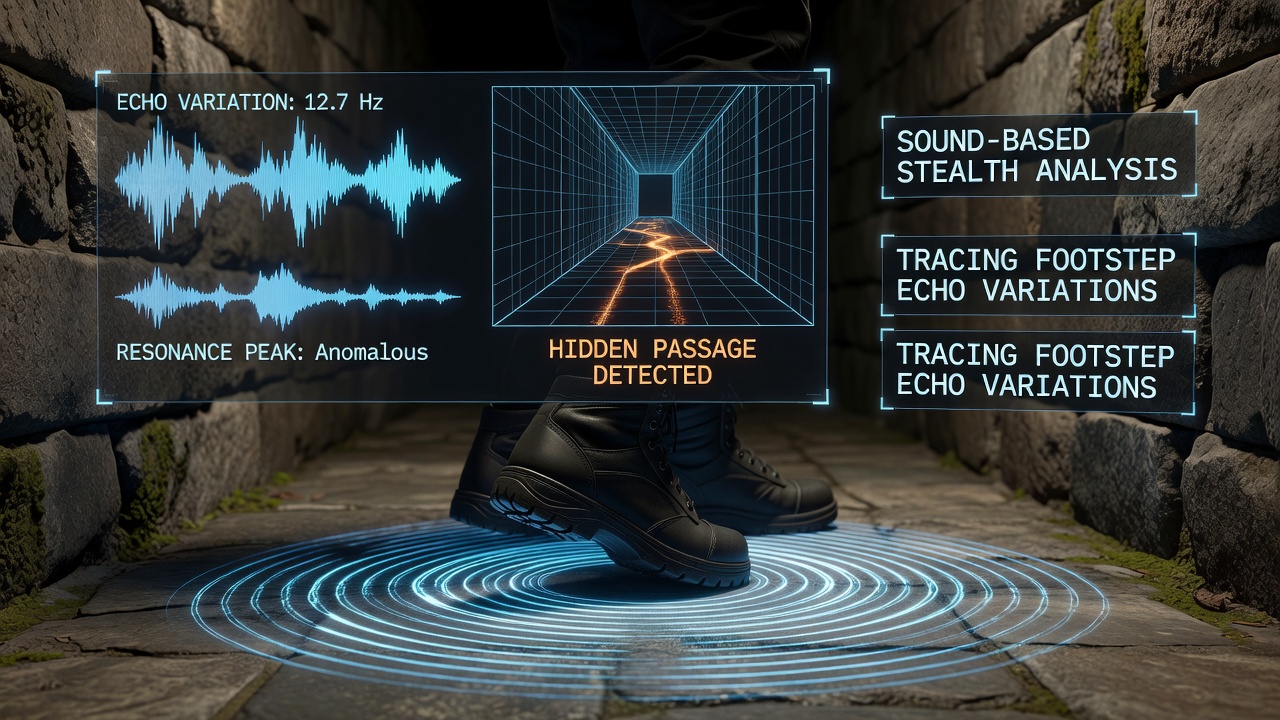
Sound design in stealth games relies on precise audio engines that simulate how footsteps generate echoes based on room geometry, materials, and open spaces, allowing players to identify anomalies that signal concealed routes. Developers implement these systems through ray-tracing audio models or convolution reverb techniques, where each surface reflects sound at different frequencies and decay rates. Players monitor variations in echo timing and pitch to distinguish solid walls from false panels or narrow corridors that lead elsewhere.
Core Mechanics of Echo Detection
Games featuring sound-based stealth often calculate footstep propagation in real time, factoring in variables such as surface type, distance, and obstructions so that echoes return with measurable differences when a hidden passage exists nearby. Research from Stanford University on procedural audio shows these calculations produce distinct reverb tails that last longer in larger volumes or shift in frequency when air pockets behind walls alter the reflection path. Observers note that players adjust movement speed to control step intervals, creating consistent echo patterns that make deviations stand out against the baseline acoustic profile of a level.
Audio occlusion filters further refine this process by dampening high frequencies through thick barriers while permitting low-end rumbles to pass, and hidden doors frequently produce echo signatures that bypass these filters in subtle ways. Data from industry reports compiled by the International Game Developers Association indicates that titles released after 2023 allocate dedicated CPU threads to audio simulation, ensuring echo variations remain responsive even during complex stealth sequences involving multiple moving agents.
Player Techniques and In-Game Applications
Those who study these titles describe a process where repeated traversal of an area builds an internal map of expected echo responses, after which a single mismatched return prompts closer inspection of nearby architecture. In one documented case from a 2024 release, players traced a shorter echo delay to locate a vent shaft disguised as part of an industrial duct system, and similar patterns appear across several open-ended exploration games that emphasize audio cues over visual markers. Developers integrate these elements by tagging specific geometry nodes with custom acoustic properties that only activate under particular player movement conditions.
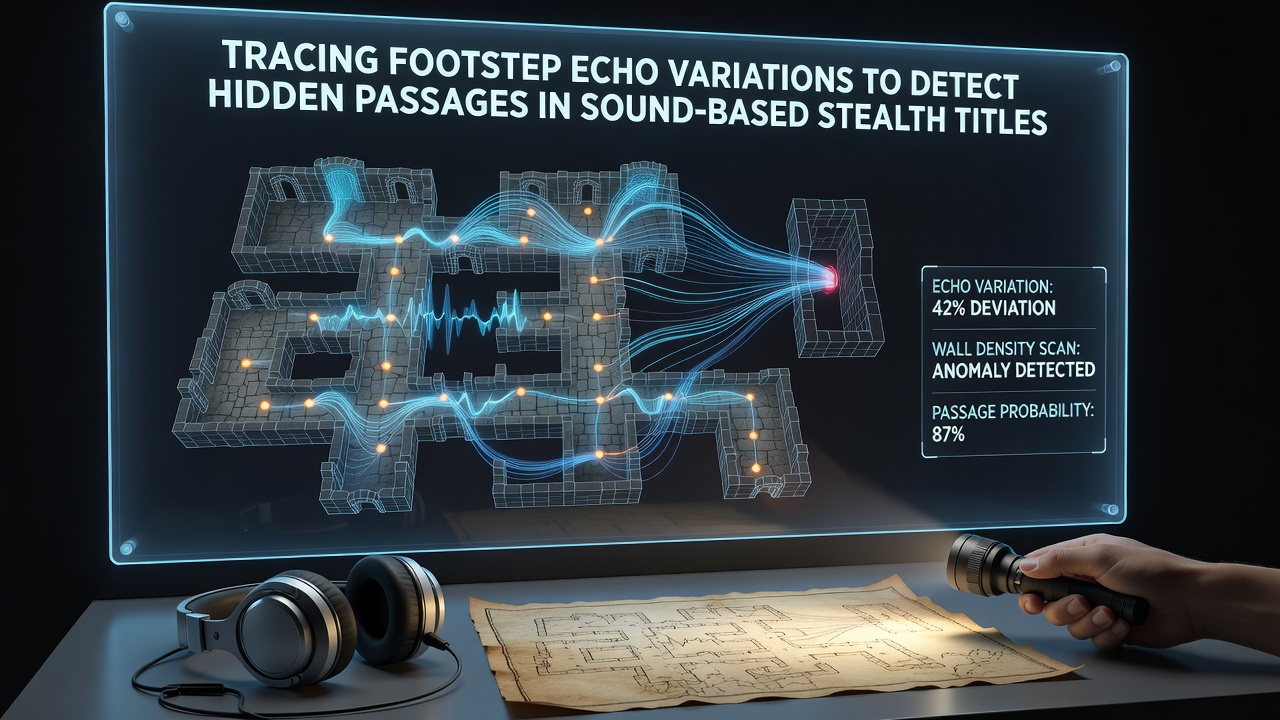
Equipment upgrades in certain titles modify microphone sensitivity or add directional audio filters, extending the effective range at which echo variations become audible and allowing detection from greater distances without line-of-sight confirmation. Studies published by researchers at the University of Melbourne on interactive sound design confirm that such upgrades alter the signal-to-noise ratio in the game's audio mix, making subtle passage indicators more prominent against ambient tracks. Players combine these tools with crouch-walking mechanics to reduce step volume while preserving enough acoustic energy for echo analysis.
Technical Implementation Across Titles
Engine-level support for dynamic sound propagation has expanded since 2025, with middleware solutions now handling multi-threaded echo calculations that respond to destructible environments or player-placed objects. In August 2026 several major studios announced patches that refine occlusion algorithms for next-generation hardware, resulting in more accurate differentiation between genuine hidden passages and simple alcoves. These updates draw from peer-reviewed acoustic modeling techniques originally developed for architectural simulation software, adapted to run at 60 frames per second without compromising frame pacing.
Case studies from multiple studios reveal that level designers place hidden routes at intersections where echo paths naturally converge or diverge, creating acoustic hotspots that reward attentive listening. Sound designers calibrate these locations using in-engine debug visualizations that display real-time reverb impulse responses, ensuring the variations remain perceptible yet not obvious during initial playthroughs. External factors such as weather effects or time-of-day cycles occasionally modulate echo behavior, adding layers of complexity that require players to account for changing environmental audio conditions.
Conclusion
Tracing footstep echo variations functions as a core gameplay loop in sound-focused stealth experiences because it ties directly to the underlying physics simulation and rewards systematic observation of acoustic feedback. Continued refinement of audio engines supports increasingly nuanced detection methods, while player communities document specific echo signatures across titles to assist others in locating concealed areas. The approach integrates technical audio processing with level design principles that emphasize auditory exploration alongside visual and spatial awareness.