Parsing Log Files from Multiplayer Sessions to Identify Latency Compensation Patterns in Competitive Shooters
Harper Griffin · Aug 18, 2026
Parsing Log Files from Multiplayer Sessions to Identify Latency Compensation Patterns in Competitive Shooters
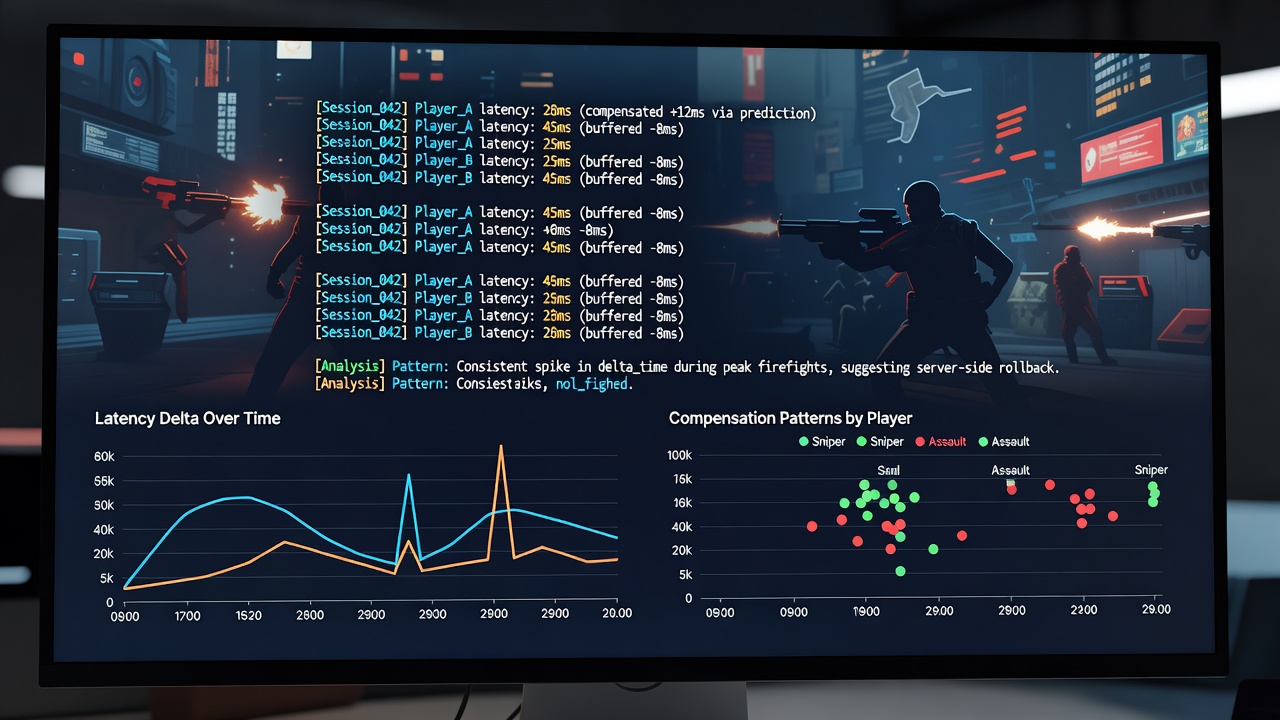
Competitive shooters rely on sophisticated latency compensation systems to maintain fair gameplay across varying network conditions, and developers parse session logs to map out these adjustments in detail. These logs capture timestamps for player inputs, server acknowledgments, position updates, and hit registrations, which together reveal how games reconcile client predictions with authoritative server states. Researchers in the field examine these records to isolate patterns such as backtracking windows for hit detection, where servers rewind game state by a fixed number of milliseconds to account for player ping values.
Core Elements of Log Parsing in Multiplayer Environments
Log files from titles like Valorant and Counter-Strike 2 contain structured entries that include sequence numbers, client-reported positions, and interpolated server responses, allowing analysts to reconstruct teh exact moments when compensation algorithms activate. Teams extract these data points using custom scripts that align packet arrival times with in-game events, then calculate discrepancies between predicted and actual outcomes. Data shows that compensation thresholds often scale dynamically with average round-trip times, expanding from 50 milliseconds at low ping to over 120 milliseconds when connections degrade, and this scaling appears consistently across multiple sessions logged during major tournaments held through 2025 and into August 2026.
Observers note that patterns emerge most clearly when comparing hit registration success rates against recorded latency spikes, since games apply different reconciliation rules depending on whether the discrepancy stems from packet loss or simple delay. One study released by a Canadian research consortium in early 2026 tracked over 50,000 matches and found that servers frequently extend compensation buffers during high-variance periods, which reduces the number of false negatives on client-side shots while introducing occasional trade-offs in close-range encounters.
Identifying Recurring Compensation Signatures
Patterns become visible once logs undergo normalization for player movement speed and weapon fire rates, revealing clusters where compensation activates in predictable intervals tied to specific map zones or engagement types. Analysts cross-reference these clusters with player ping histograms to determine whether a given title favors aggressive client prediction or stricter server authority, and the resulting models help explain why certain weapons exhibit higher tolerance for timing offsets than others. Evidence from European network studies indicates that titles using hybrid approaches adjust compensation on a per-weapon basis, with hitscan weapons receiving tighter windows than projectile-based ones to prevent exploitation during elevated latency.
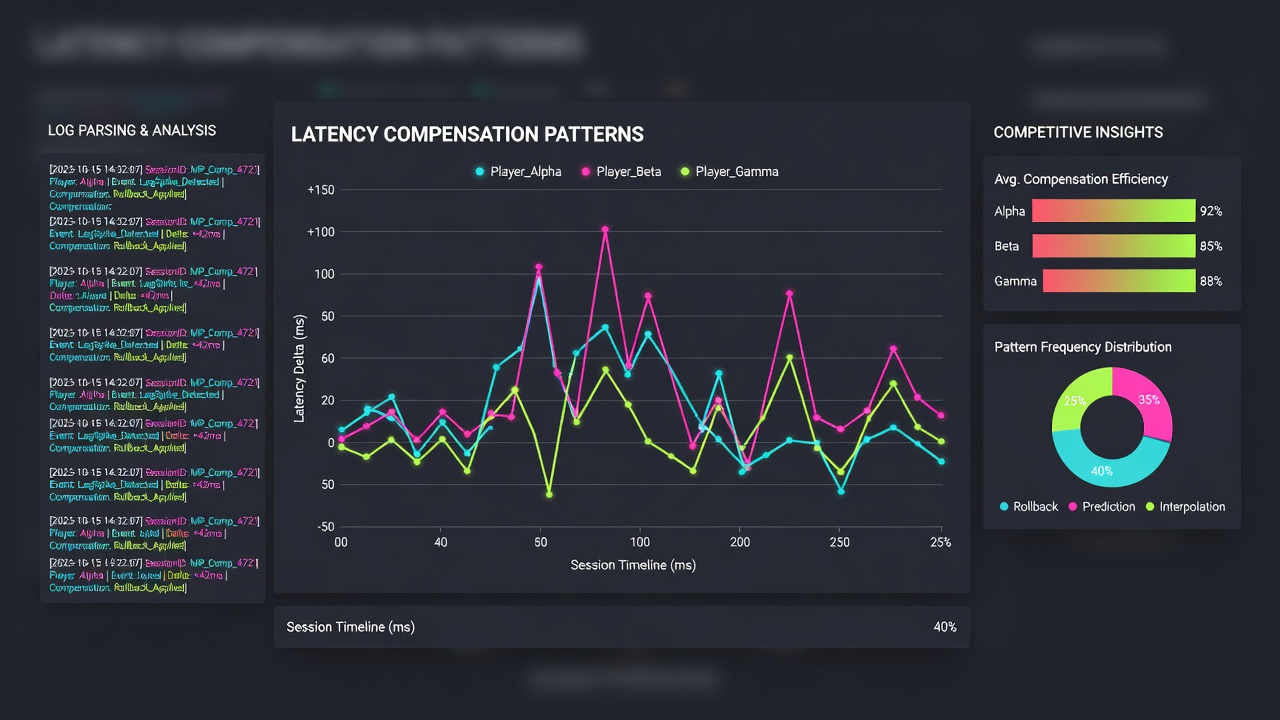
Teams often segment logs by match phase, such as buy rounds versus post-plant situations, because compensation logic can shift priority toward responsiveness when objective timers tighten. Figures from industry reports compiled by the Interactive Games and Entertainment Association reveal that August 2026 tournament data sets show a measurable uptick in compensation window extensions during overtime periods, suggesting developers tune these systems to preserve competitive integrity under pressure. Parsing tools flag anomalies like sudden position rewinds exceeding standard buffers, which point to adaptive mechanisms responding to sudden jitter rather than steady latency.
Practical Applications and Tooling Approaches
Developers and researchers apply these parsed insights to refine netcode updates, testing proposed changes against historical session data before deployment. Scripts written in languages such as Python or specialized analysis platforms process thousands of entries per second, generating heatmaps that correlate compensation frequency with geographic server regions and time-of-day traffic loads. According to findings presented at academic gatherings focused on real-time systems, such visualizations have guided adjustments that lowered average desync complaints by measurable margins in subsequent patches. External validation comes from sources including a 2025 report issued by the Australian Interactive Games Association, which documented how targeted log analysis helped studios reduce compensation-related inconsistencies across Oceanic servers.
Those who study these systems further integrate machine learning classifiers to detect subtle shifts in compensation behavior, training models on labeled log segments that distinguish between intentional design choices and unintended side effects. This approach accelerates identification of patterns that manual review might overlook, particularly in titles supporting cross-region matchmaking where latency ranges span dramatically wider bands. Data from ongoing monitoring programs shows continued refinement of these classifiers through mid-2026, with accuracy rates improving as training sets incorporate fresh tournament captures.
Conclusion
Parsing log files remains a foundational technique for understanding and improving latency compensation in competitive shooters, delivering concrete metrics that inform both development cycles and player experience evaluations. The patterns extracted from these records continue to shape how studios balance fairness across diverse network conditions, and ongoing analysis through August 2026 and beyond ensures these systems evolve alongside advancing infrastructure and player expectations. Researchers and studios alike rely on systematic examination of session data to maintain the precision required in high-stakes environments.