Deciphering Procedural Generation Seeds for Consistent Loot Distribution in Survival Crafting Games
Erik Perry · Jun 25, 2026
Deciphering Procedural Generation Seeds for Consistent Loot Distribution in Survival Crafting Games
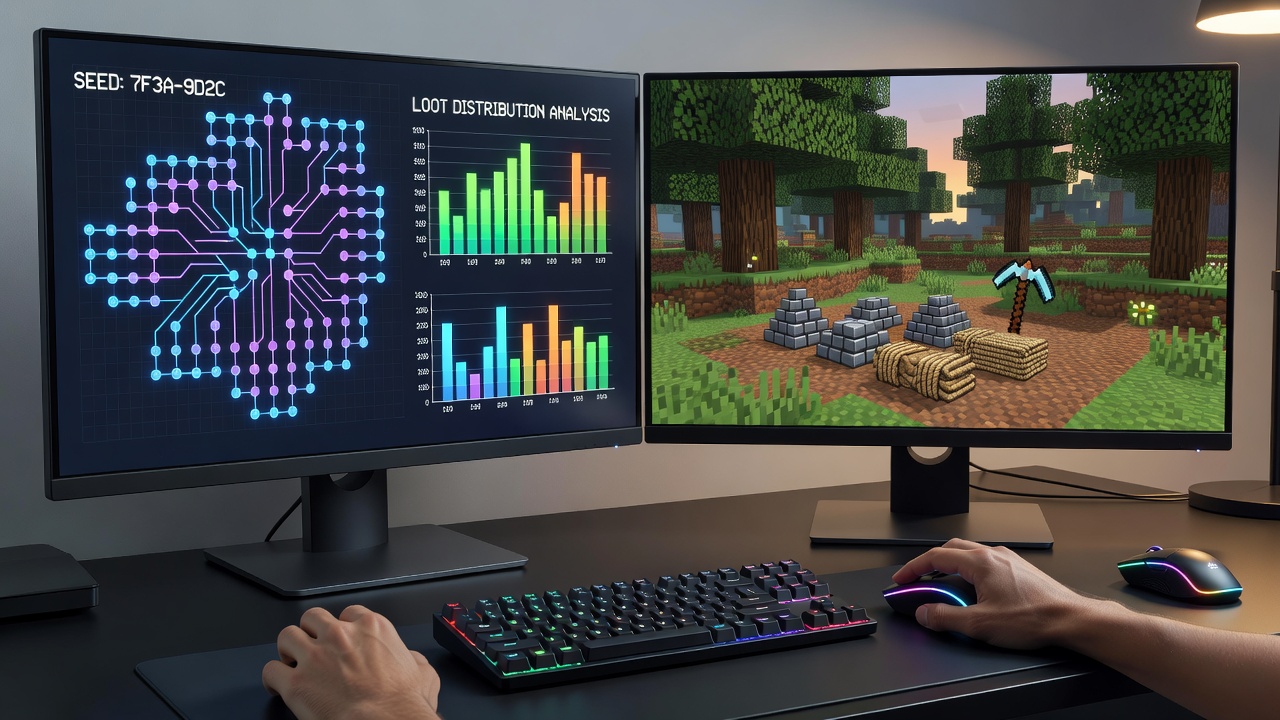
Procedural generation relies on seeds as numerical inputs that drive algorithms to create consistent worlds across different play sessions and players often examine these seeds to locate reliable loot spawns in survival crafting titles. Developers implement seeds to control terrain formation, resource placement, and item distribution while players analyze the underlying patterns to replicate favorable outcomes in games such as Minecraft or Valheim. Research from the University of Melbourne indicates that seed-based systems allow for deterministic generation where the same seed produces identical layouts every time which supports targeted exploration strategies in resource-scarce environments.
Core Mechanics of Seed-Driven Generation
Algorithms process seeds through pseudorandom number generators that determine everything from biome boundaries to chest contents and observers note that small variations in seed values can shift loot tables dramatically while maintaining overall world coherence. Data from industry reports shows that survival crafting games typically use 64-bit seeds which provide an enormous range of possible configurations yet certain patterns emerge when researchers map seed inputs against output distributions. Players examine generated structures by cross-referencing known seed values with in-game discoveries and this process reveals clusters where high-value items appear more frequently under specific conditions.
Techniques for Seed Analysis
Analysts extract seeds from save files or world creation menus then input them into external tools that simulate generation steps and studies from the Technical University of Munich demonstrate how these simulations predict loot locations with increasing accuracy as more data points accumulate. Methods include logging multiple runs with the same seed to identify invariant elements such as fixed dungeon placements or repeatable ore veins and those who study this approach often combine it with coordinate mapping to pinpoint consistent drops. But here's the thing: environmental factors like player actions can alter secondary spawns so analysts focus on static elements that remain unchanged regardless of progression paths.
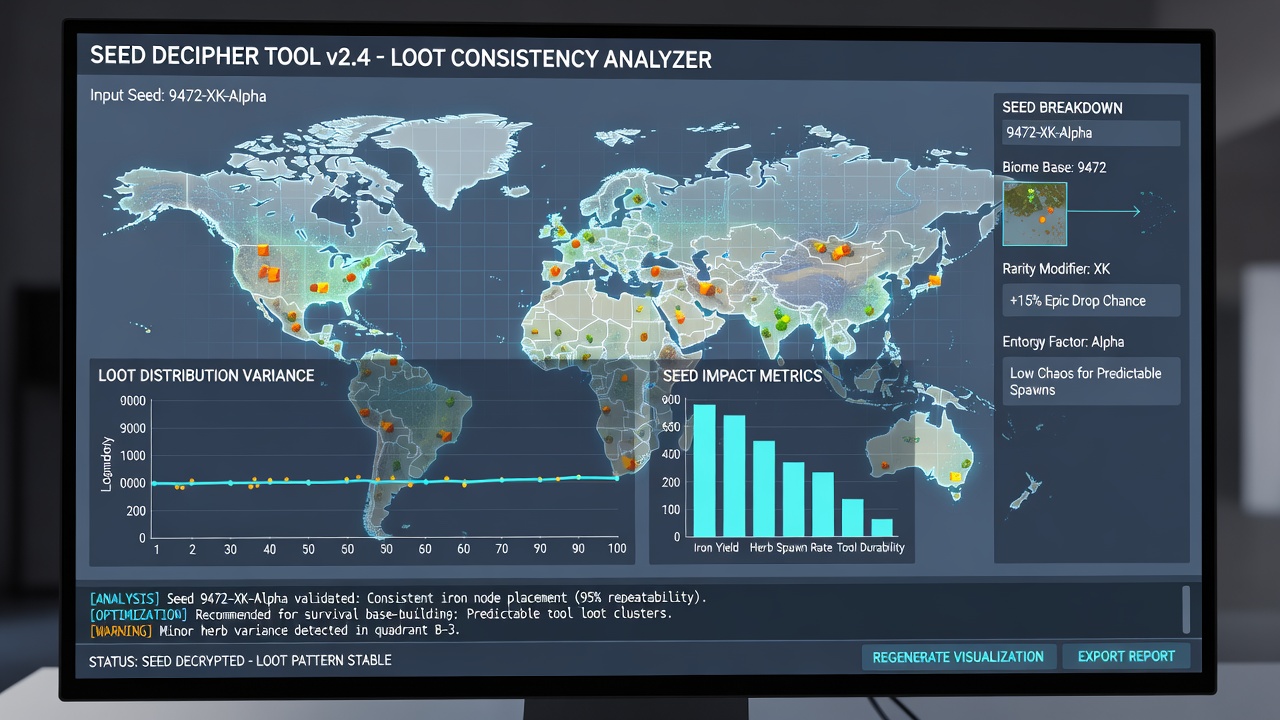
Tools developed by modding communities parse seed data into visual overlays that highlight potential loot zones and evidence suggests these overlays reduce search times in expansive procedural maps. In June 2026 developers showcased advancements in seed visualization software at an industry event which integrated machine learning models to forecast distribution probabilities based on historical generation logs. Such integrations allow for quicker identification of optimal seeds without exhaustive manual testing.
Applications in Popular Titles
Survival crafting games like Terraria and Subnautica employ seeds that govern underwater resource clusters or surface chests and researchers have documented cases where specific seeds yield elevated quantities of rare materials in designated areas. Players document these findings in shared databases that catalog seed-to-loot correlations across versions and figures reveal that community contributions have accelerated the mapping of reliable distribution patterns. What's interesting is how updates to game engines sometimes alter generation rules which requires analysts to recalibrate their models to maintain consistency across patches.
Challenges and Limitations
Encryption in newer titles obscures direct seed access which forces analysts to rely on indirect observation methods such as pattern recognition from multiple playthroughs and reports from the Canadian Game Developers Association highlight ongoing efforts to balance accessibility with anti-cheat measures. Networked multiplayer environments introduce additional variables where host seeds interact with client-side elements and this interaction can lead to divergent loot experiences unless synchronized properly. Analysts address these issues by establishing baseline tests that isolate core generation parameters from external influences.
Academic papers on procedural systems emphasize the role of entropy management in seed algorithms and data indicates that controlled randomness preserves replayability while enabling predictable outcomes for dedicated users. Those who've examined large datasets find that loot distribution follows statistical distributions rather than uniform randomness which explains why certain seeds outperform others in resource yield.
Future Developments and Industry Trends
Emerging frameworks incorporate player feedback loops to refine seed generation dynamically and according to European research initiatives these adaptive systems could enhance consistency without sacrificing variety. Integration with cloud-based analysis platforms allows real-time seed evaluation during gameplay sessions and this capability expands access to advanced deciphering techniques for broader audiences. Observers note continued collaboration between academic institutions and studios which accelerates the refinement of tools used for loot prediction.
Conclusion
Deciphering procedural generation seeds provides structured approaches to achieving consistent loot outcomes in survival crafting games through systematic analysis and data-driven methods. Continued advancements in simulation tools and community resources support these efforts while maintaining the core appeal of procedurally varied worlds. Research continues to evolve alongside game technology which ensures that players and developers alike benefit from deeper insights into generation mechanics.