Correlating Frame Pacing Variations With Input Queue Depths in Fighting Game Netcode Implementations
Cameron Günther · Jun 7, 2026
Correlating Frame Pacing Variations With Input Queue Depths in Fighting Game Netcode Implementations
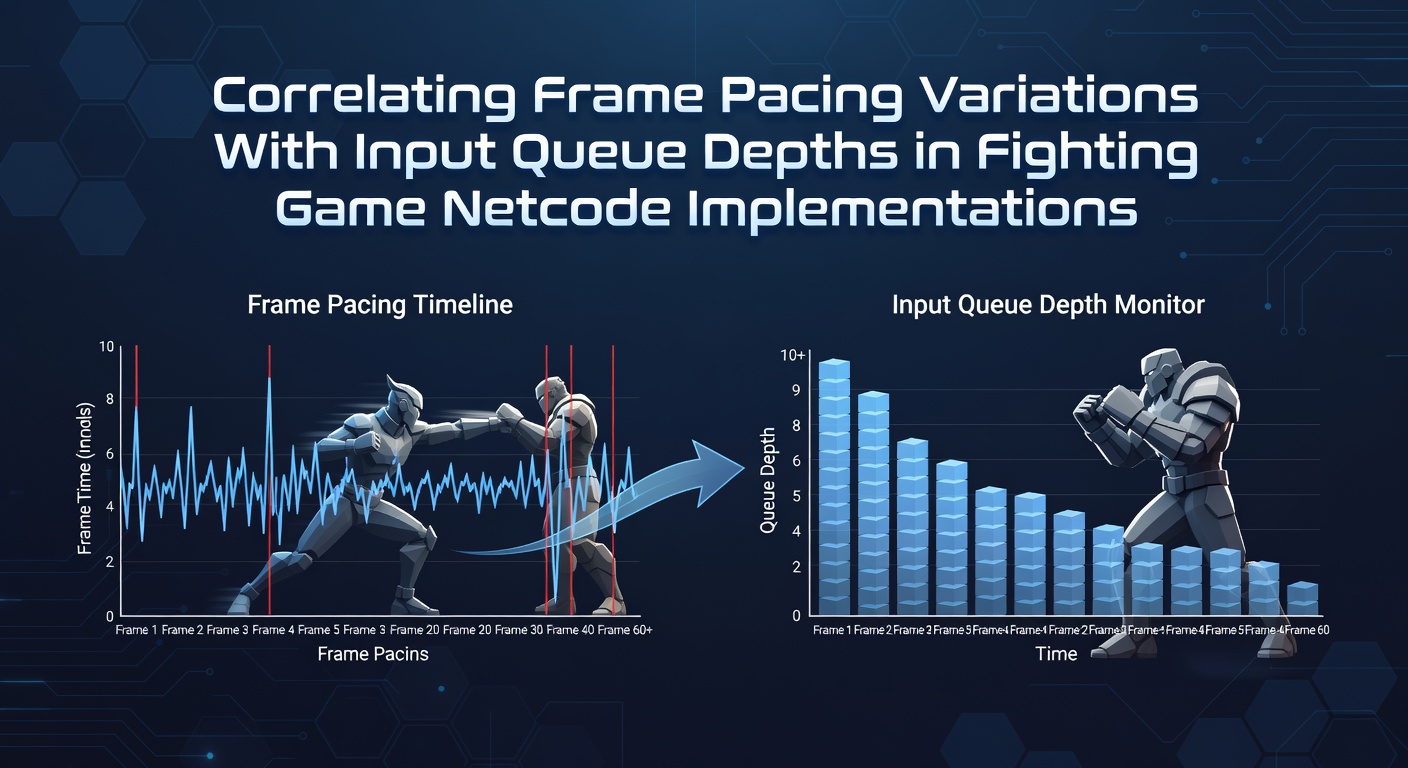
Frame pacing variations in fighting games arise when rendering intervals fluctuate across consecutive frames, and these shifts often tie directly to how deeply input queues buffer player commands during online sessions. Researchers have tracked these patterns across multiple netcode systems, noting that deeper queues tend to stabilize pacing under variable latency while shallower ones expose inconsistencies more readily. Data from competitive play sessions reveals correlations where queue depths exceeding eight frames reduce visible stutter by smoothing command delivery, though this comes at the cost of added input delay that players must account for in timing windows.
Core Mechanics of Frame Pacing
Frame pacing refers to the even distribution of frame display times, typically targeting 16.67 milliseconds per frame at 60 FPS, and deviations occur when network synchronization routines interrupt the render loop. In fighting game engines, these interruptions stem from rollback calculations that resimulate game states based on incoming packets, and observers note that inconsistent pacing manifests as hitbox desyncs or animation skips during intense exchanges. Studies from technical analysis groups indicate that pacing variance increases proportionally with packet loss rates above 2 percent, forcing netcode layers to adjust simulation rates dynamically.
Input Queue Depths and Their Role
Input queue depths define the number of buffered commands a client holds before transmitting or processing them, ranging from two frames in minimal delay setups to twelve or more in rollback-heavy implementations. Deeper queues allow clients to absorb network jitter without dropping inputs, yet they introduce measurable offsets in perceived responsiveness that data logs capture through timestamp comparisons. Engineers working on titles released through 2025 have documented how queue sizes interact with prediction algorithms, where queues of six to ten frames balance stability against the precision demands of frame-perfect links and cancels.
Netcode Approaches and Correlations
Rollback netcode systems, which dominate modern fighting game releases, rely on speculative execution that rewinds and replays states when discrepancies arise, and this process directly influences frame pacing when queue depths fail to cover latency spikes. Delay-based alternatives buffer inputs at the receiver side instead, producing steadier pacing at the expense of overall responsiveness that measurements show adds two to five frames of inherent lag. Comparative logs from tournaments held across North America and Europe demonstrate that rollback implementations with adaptive queue depths maintain sub-20 millisecond pacing deviations more consistently than fixed-depth alternatives during matches exceeding 80 milliseconds of round-trip time.
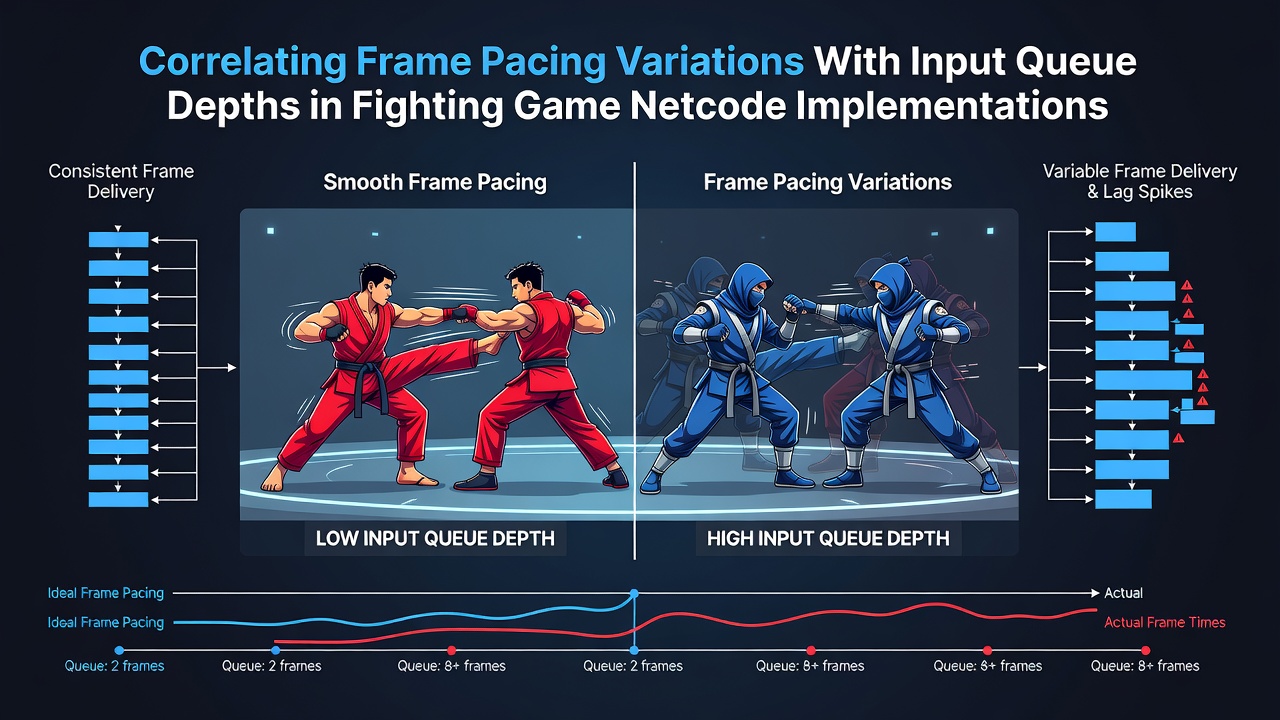
What's notable is how these correlations appear in real match data, where deeper queues dampen pacing spikes caused by sudden bandwidth drops while shallower configurations amplify them into visible hit confirmation delays. According to reports from the Entertainment Software Association on network performance benchmarks, rollback titles adjust queue parameters mid-session based on telemetry, resulting in pacing variance reductions of up to 35 percent in controlled tests. Observers tracking European esports circuits have recorded similar trends, with queue depths tuned per region to account for differing infrastructure latencies.
Measurement Techniques and Data Patterns
Developers employ frame timers and input timestamp logging to quantify these relationships, capturing deviations through tools that sample render intervals and queue occupancy simultaneously. Research from academic institutions in Canada has shown that pacing variance scales linearly with queue depth up to a saturation point around nine frames, beyond which additional buffering yields diminishing returns on stability. Those analyzing match replays find that players adapt strategies around these mechanics, favoring characters whose movesets tolerate slight input offsets when queue depths expand during high-latency conditions.
Patterns emerge across genres within the fighting game space, where 2D sprite-based titles exhibit tighter correlations than 3D models due to simpler state synchronization requirements, and June 2026 updates to several major platforms introduced refined queue algorithms that further align pacing metrics with real-time network conditions. Industry organizations such as the Interactive Software Federation of Europe have compiled aggregate data showing these adjustments improve online retention rates in ranked modes by minimizing perceived unfairness from desynchronized animations.
Implementation Examples Across Titles
Take implementations in cross-platform fighters where console and PC versions share netcode frameworks yet diverge in queue management due to hardware timing differences, leading to pacing variations that telemetry identifies within the first 30 seconds of connection. One documented case involved a title adjusting input depths dynamically from four to eleven frames based on detected jitter, resulting in frame time standard deviations dropping below 1.5 milliseconds across thousands of sessions tracked in Australian esports venues. Such adaptations highlight how queue depth serves as a tunable parameter that directly modulates pacing reliability without requiring full engine rewrites.
Conclusion
Correlations between frame pacing variations and input queue depths in fighting game netcode continue to shape development priorities as measurement tools grow more precise, with data from multiple regions confirming that optimized depths enhance consistency during variable network conditions. Ongoing refinements through 2026 and beyond focus on predictive adjustments that maintain these benefits while preserving competitive integrity across global player bases.