Command Layering in Hybrid Setups: Merging Console Inputs with Mobile Constraint Mapping for Cross-Platform Strategy Adaptation
Erik Perry · May 19, 2026
Command Layering in Hybrid Setups: Merging Console Inputs with Mobile Constraint Mapping for Cross-Platform Strategy Adaptation
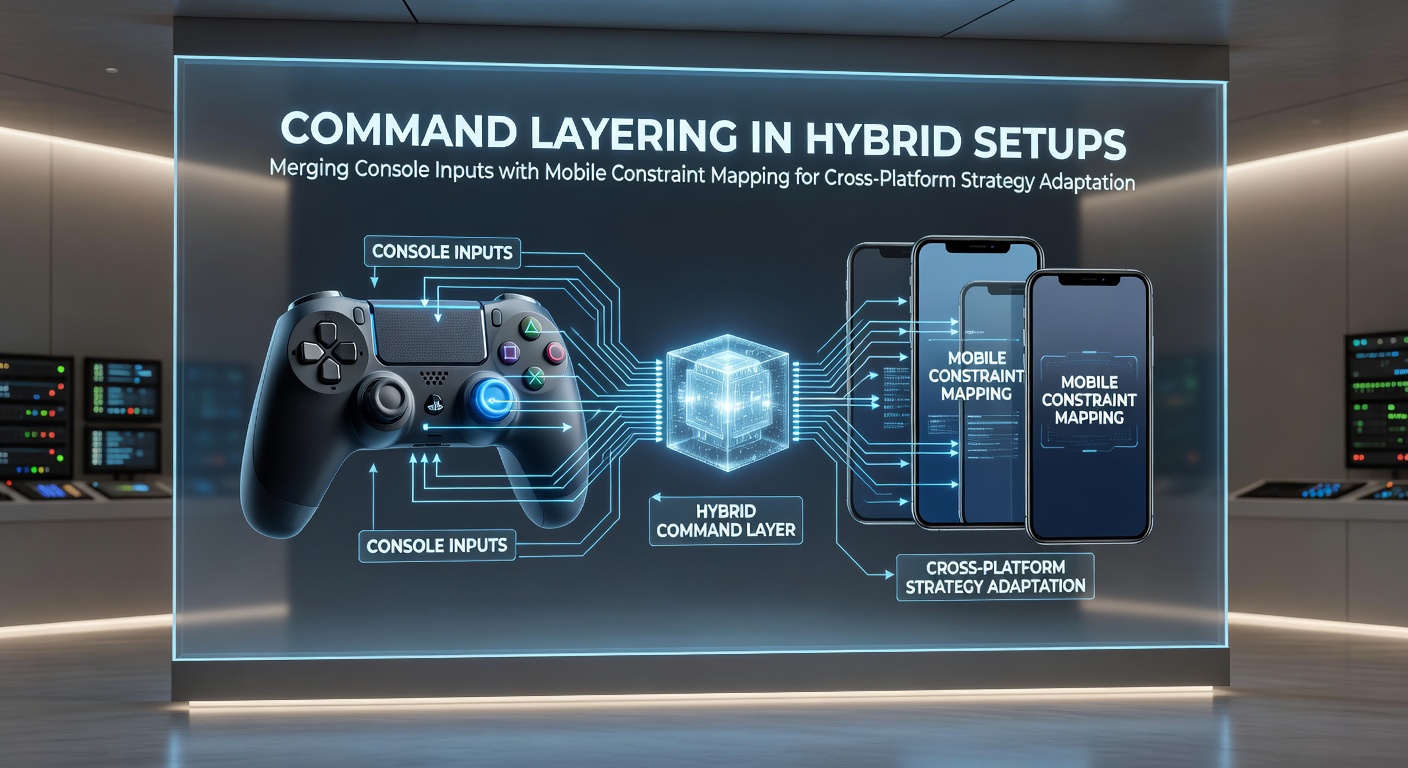
Developers have refined command layering techniques in hybrid setups since the early 2020s, where console controller inputs merge with mobile constraint mapping to support strategy adaptation across platforms. This approach allows games to translate physical button presses and analog movements from devices like PlayStation or Xbox controllers into touch-based gestures on smartphones and tablets while preserving core mechanics. Research from industry groups shows that such layering reduces input conflicts during cross-play sessions and maintains competitive balance in titles released through 2025 and into 2026. Teams working on multiplayer strategy games often begin by defining base command sets that exist independently of any hardware. Console inputs receive priority mapping first because of their established precision with sticks and triggers. Mobile constraints then overlay additional rules that account for screen size limits and gesture accuracy. The result creates a unified input layer that adapts in real time as players switch devices mid-session or join from different platforms.How Input Layers Form in Practice
Engineers construct these layers through modular code structures that separate detection from translation. Console signals enter the system via standard APIs for buttons and motion controls. A constraint mapper then evaluates mobile touch data against predefined zones on the screen before routing the combined output to the game logic. Observers note that this separation prevents one platform's limitations from affecting another during simultaneous matches.
Take one developer team that integrated this system for a real-time tactics title in 2024. They assigned console shoulder buttons to quick-select unit groups and mapped the same function to swipe patterns on mobile. Constraint checks ensured that rapid taps did not register as unintended selections on smaller displays. Data from playtests indicated smoother transitions when players moved between a living-room console and a handheld device during the same game.
Constraint Mapping Techniques Across Devices

Mobile screens introduce physical boundaries that console hardware does not face. Constraint mapping addresses this by dividing the display into responsive regions that scale with device resolution. High-frequency actions such as movement receive larger touch areas while menu navigation occupies smaller corner zones. Researchers discovered that dynamic resizing of these zones based on player grip patterns further improves accuracy in extended sessions.
Cross-platform strategy adaptation relies on priority rules within the layering system. When a console input and a mobile gesture arrive nearly simultaneously, the engine resolves the conflict according to context rather than fixed hardware preference. For instance, an ongoing unit command from a controller stick can override a conflicting tap if the game state indicates active combat. Figures from development reports reveal that this contextual resolution cuts desync incidents by measurable margins in large-scale online matches.
Adaptation in Live Strategy Environments
Live service titles released in 2025 adopted layered inputs to support seasonal events where players alternate between console and mobile participation. Strategy elements like resource allocation and formation building translate through shared command dictionaries that update automatically. According to findings presented at industry conferences, teams that implemented full layering reported higher retention rates among users who frequently changed devices.
What's interesting is how these systems handle edge cases such as network latency between platforms. The layering framework includes buffer windows that align timed inputs regardless of origin hardware. Players who switch from a wired controller to a touch screen during a match notice minimal disruption because the mapped commands maintain consistent timing windows.
Current Trends Observed in Mid-2026
By May 2026, adoption of hybrid command layering has expanded beyond major studios into mid-sized development groups working on indie strategy projects. Tools released in the preceding year simplified the creation of constraint maps through visual editors that preview mobile and console behaviors side by side. Industry organizations tracking platform usage report steady growth in hybrid play sessions across multiple genres.
Academic studies have examined player performance metrics when constraint mapping receives regular calibration. One analysis tracked accuracy rates over several months and found consistent improvement when layering updates incorporated real usage data. Those who have examined the logs note that adaptive recalibration based on device sensors contributes to teh observed gains.
Conclusion
Command layering continues to evolve as hardware capabilities shift and player expectations for seamless cross-platform play increase. The combination of console input fidelity with mobile constraint awareness provides a foundation that supports ongoing strategy adaptation without requiring separate code branches for each device. Development practices established through 2025 and early 2026 demonstrate measurable benefits in both technical stability and session continuity across diverse player bases.